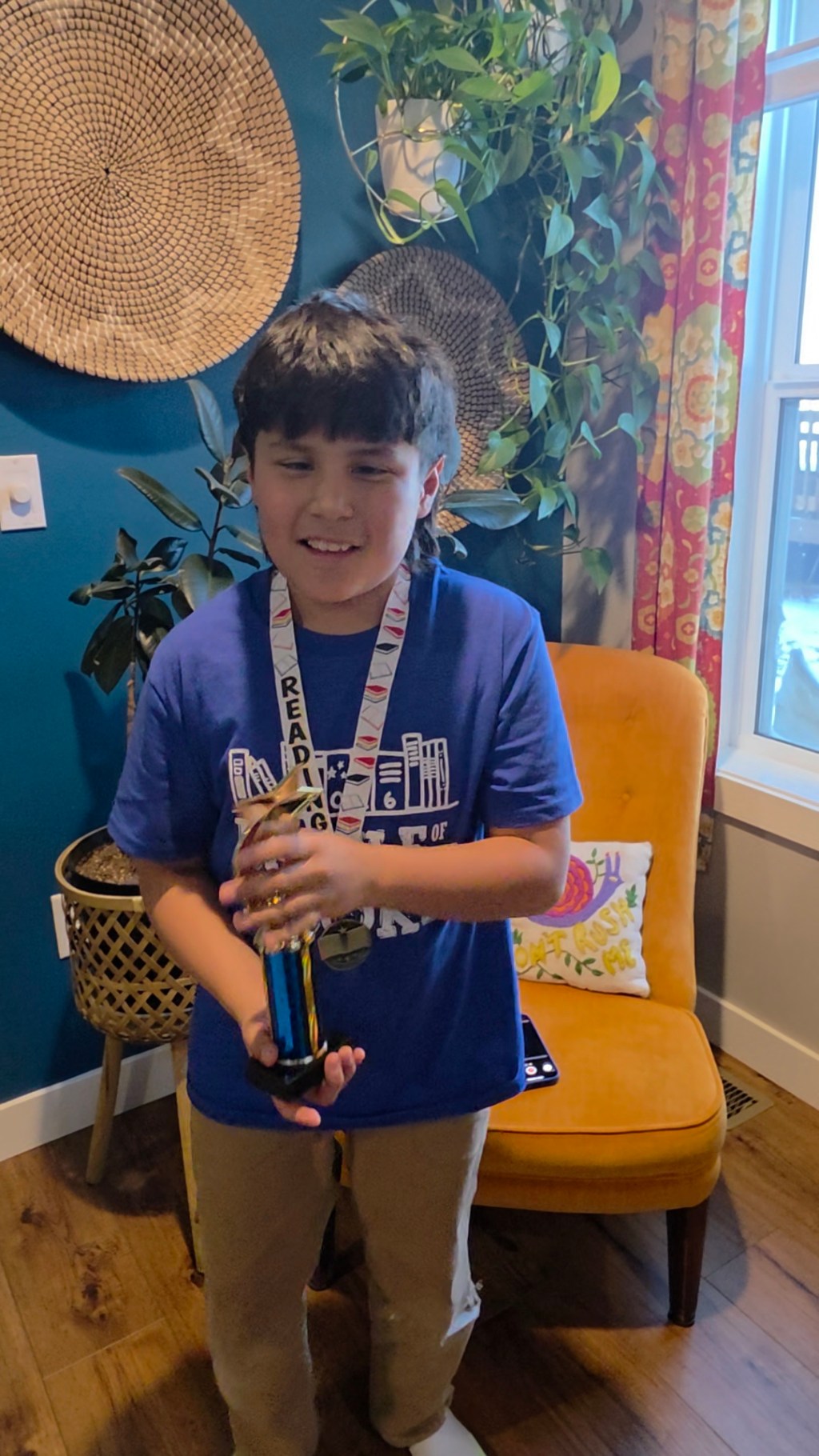
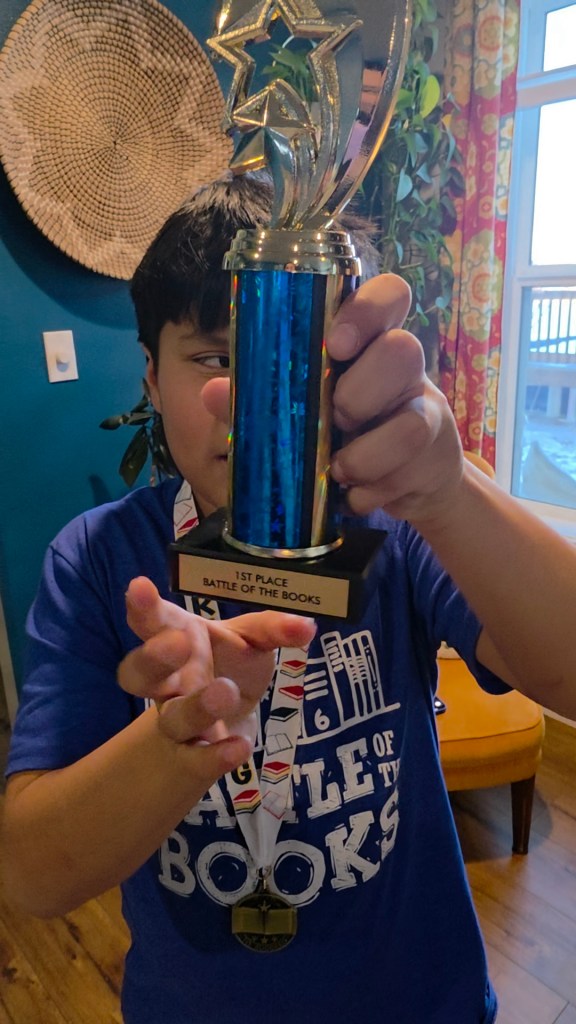
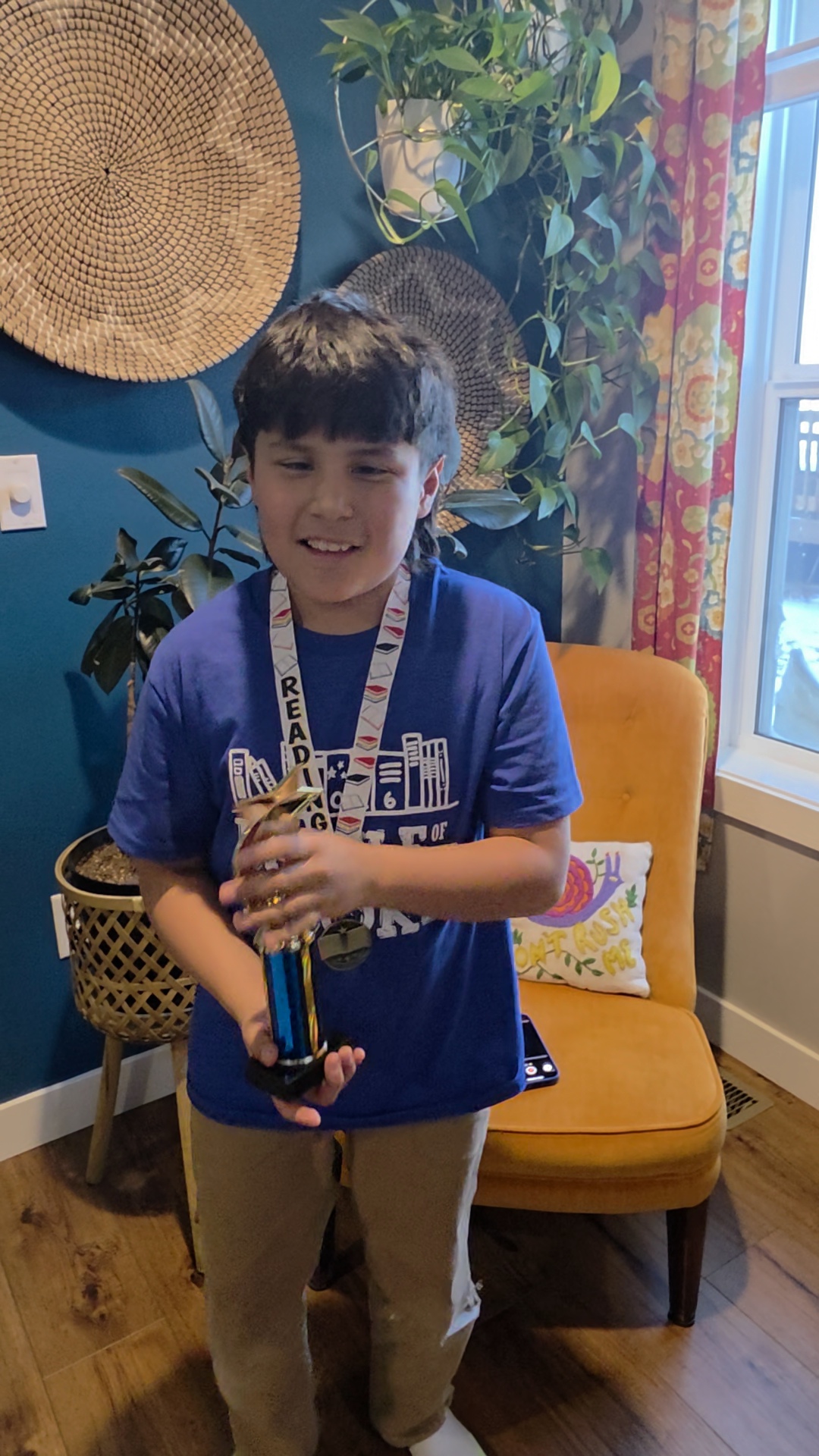
This week, Titus participated in his school’s Battle of the Books, and his team of six took first place.
They read at least five books to qualify, competed through three rounds, advanced to the final battle with the highest score, and won by correctly answering questions as a team.
It was absolutely a group effort, and every kid played an important role.
During the day, I got a lot of the same questions:
“How did Titus read the books?”
“Were they all available in braille?”
And those questions told me this was a story worth sharing.
Reading Looks Different — But the Goal Is the Same
Many people are surprised to learn that blind kids don’t rely on just one format to read. Titus uses a variety of tools, depending on the book.
One of his tools is Bookshare, a program that provides accessible books to people with print disabilities. Titus reads books on Bookshare using his APH Chameleon 20, which is a refreshable braille display. His teacher was able to download his Battle of the Books titles directly onto the Chameleon so he could read them in braille.
That means Titus wasn’t listening to summaries.
He wasn’t skipping pages.
He was reading — independently, line by line, in braille.
The Chameleon allows him to read, write, and navigate text just like his peers — just through a different medium.
And Then There Was That Book…
Not every book is accessible in every format. One of the books on the list was a graphic novel, and we couldn’t get it onto his Chameleon.
So… I read it to him.
If you’ve ever read a graphic novel out loud, you know this is not a simple task. The entire book was dialogue and pictures, which meant I was:
- Describing scenes
- Explaining visual jokes
- Switching voices constantly
- Trying to convey tone, action, and pacing
By the end, Titus was fully invested — laughing, asking questions, and loving the story.
I, on the other hand, was exhausted – but it was worth it, because literacy isn’t just about decoding words — it’s about comprehension, enjoyment, and connection to stories.
Literacy Is Built in Many Ways
Some of Titus’s books were:
- Read in refreshable braille
- Accessed through audio
- Shared through read-alouds
And all of it counts.
Braille builds spelling, grammar, and reading fluency.
Audio supports comprehension and exposure to complex stories.
Together, these tools help Titus gain the same literacy skills his peers are developing — just through different pathways.
More Than a Win
Yes, his team won and yes, we’re incredibly proud, but what matters most is this: Titus belonged.
He prepared. He contributed. He competed. He succeeded.
Blindness didn’t exclude him from the experience — access made it possible.
And if you’re wondering whether blind kids can read, compete academically, and be part of things like Battle of the Books?
The answer is yes.
They just might use a few different tools along the way.


 Amazingly Blind