
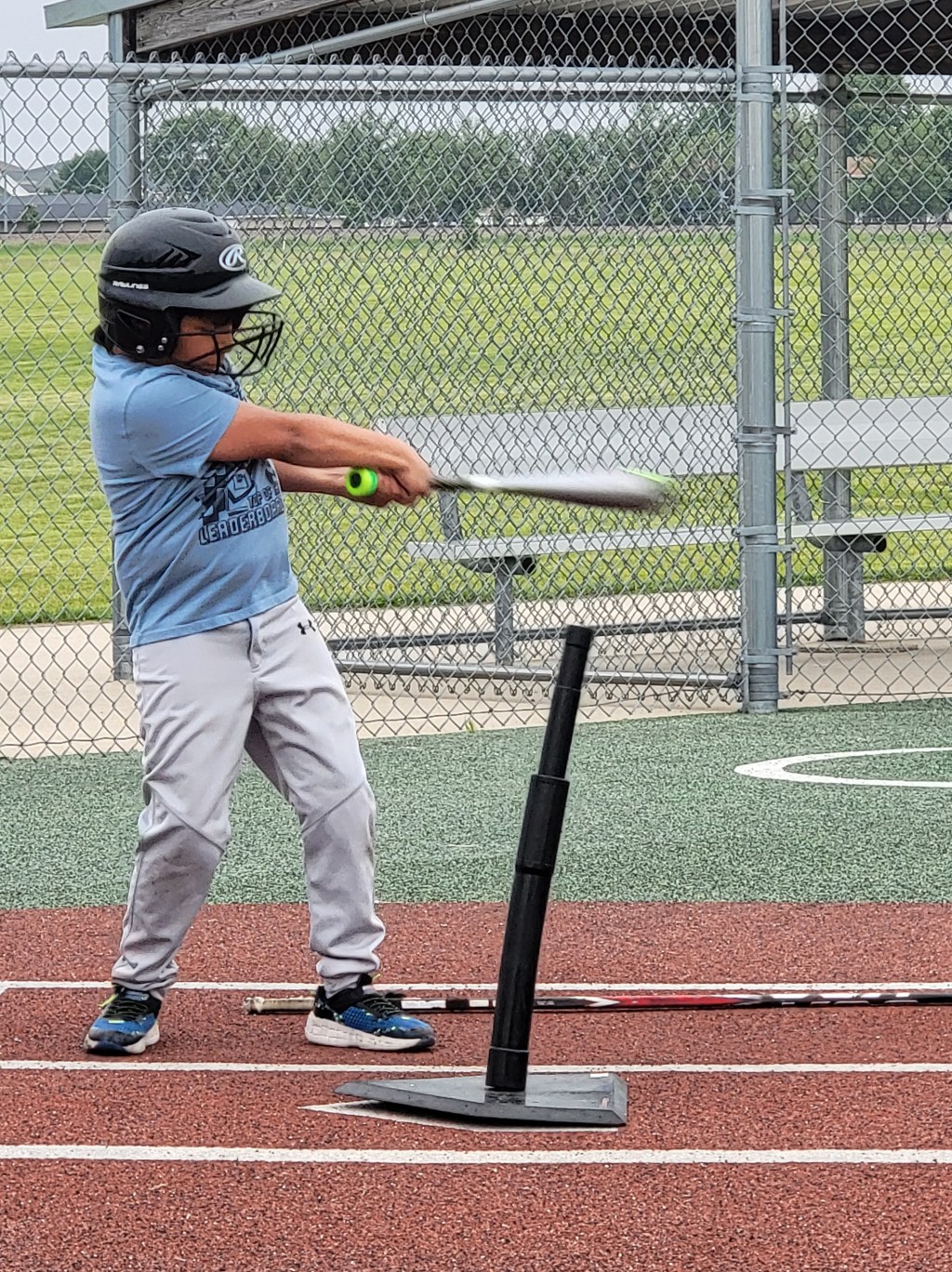
“Mom, mom”, Titus said excitingly as we walked into the house wearing a big smile! “I was crushing the ball out there.”
“Good job!” Jessica says.
“You know how I did it?
“How?”
Titus leans his head forward and points his finger to the underneath of his right eye and says, “I kept my eye on the ball!”
It was an adorable comment to us and said with such pride by him. It stemmed from a tip I gave him that day when he kept pulling his head up while hitting wiffle balls off the tee in the back yard. It is honestly the same way I taught his brother to stop lifting his head, “head down, keep your eye on the ball!” In our family we do not avoid using the word “sight” or “seeing.” Titus may not have the use of eyesight, but he sees in many other ways most of us light dependent individuals fail to pay attention to! When I told him to keep his eye on the ball, he knew I was really saying to keep his head down.
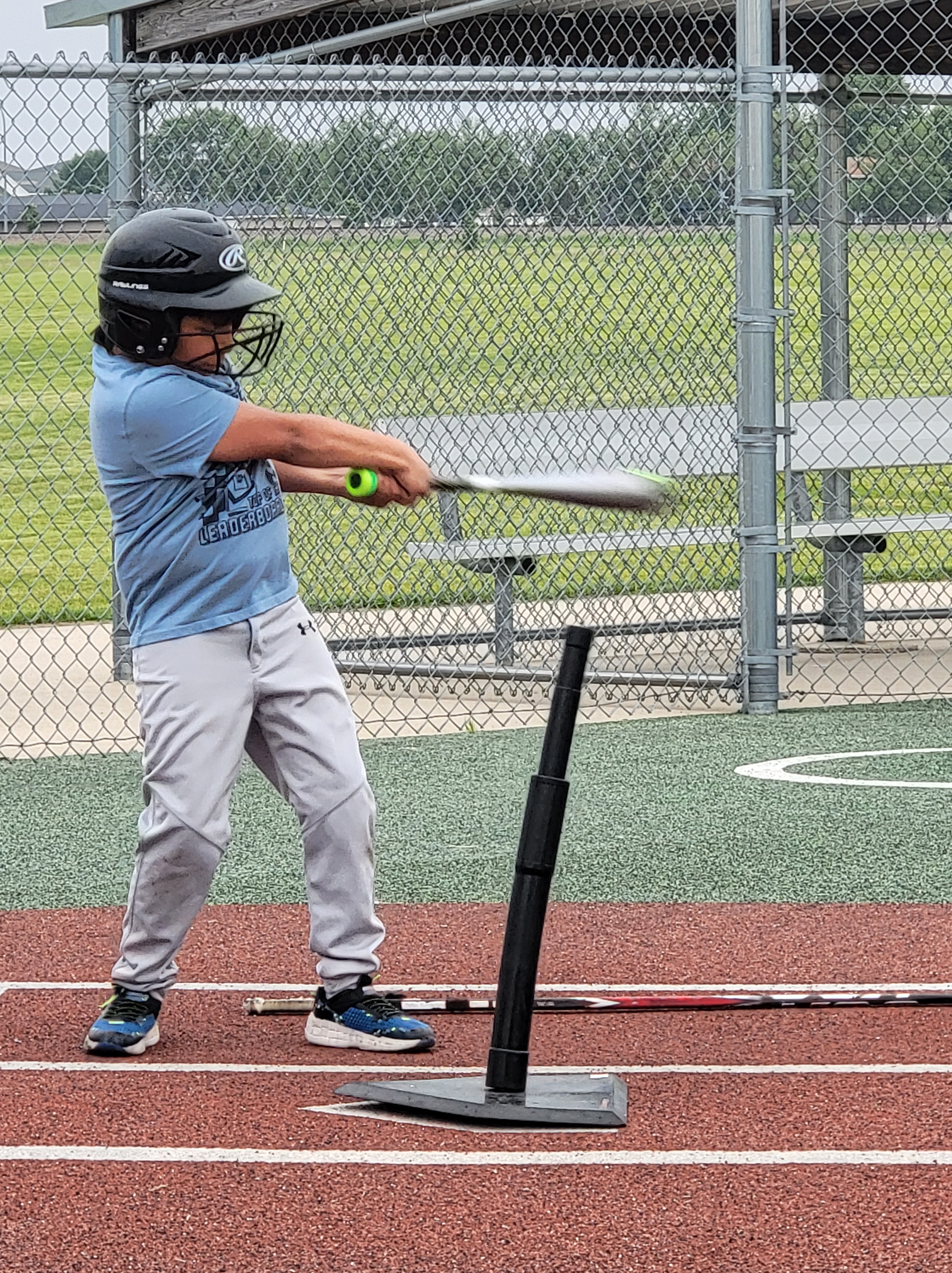
Titus’ hero is his big brother. So when Trenton started playing tee ball, Titus started swinging a bat, or technically a toy log from a logging truck the boys had. The real trick is teaching a kid how to swing a bat when they have literally never seen someone swing a bat before, nor have the ability to mimic your movements without holding onto you with their hands. It began by me putting him in a ready position with that toy log raised up by his shoulder and showing him how to swing. I would say, “ready, pitch” upon which he would swing. I would then say, “home run” which was followed by a little happy dance and him saying, “again!” This would go on for a good while, or for as long as I had patience anyway! Eventually we moved onto foam and plastic bats and wiffle balls. Even in the winter Titus would hit whiffle balls in the garage to pass the time. He needs a little help getting set and aligned in the right spot but would largely do most of this himself. The human brain is wonderful at filling in the missing details, so I would mostly just let him swing away and keep most of the instruction to minimum. When he got old enough to handle an aluminum bat, we started going to batting cages and ball diamonds when they aren’t being used. He often sets the bucket of baseballs behind his legs to help him line up to the tee while Trenton and I shag balls. We are starting to work on the finer details of the swing now that he has more understanding, but it’s still hand over hand teaching him to turn his hips and bring his hands through the swing. At one point I put a key finder in the tee, but his ear is so good that he started hitting the beeper below the ball rather than the ball. Also, I caution everyone to realize that a blind batter will not know you are in the way unless you use constant communication. Titus is not allowed to swing unless he asks for the ok, and any friends playing with him are required to wear batting helmets.
When it comes to playing catch, we roll the ball back to him and Titus pops up and throws to us. We usually clap our glove or say, “here, here, here,” so he knows where to throw it to. Yes, there was a lot of time chasing down errant throws, but those are getting to be less each year. The most difficult part of his throw is teaching him how to connect the wrist with the arm. For this, we would sit really close with his throwing elbow in a glove to force the wrist to toss the ball. We also will occasionally use a towel. The towel will not snap unless he uses both his arm and wrist together.
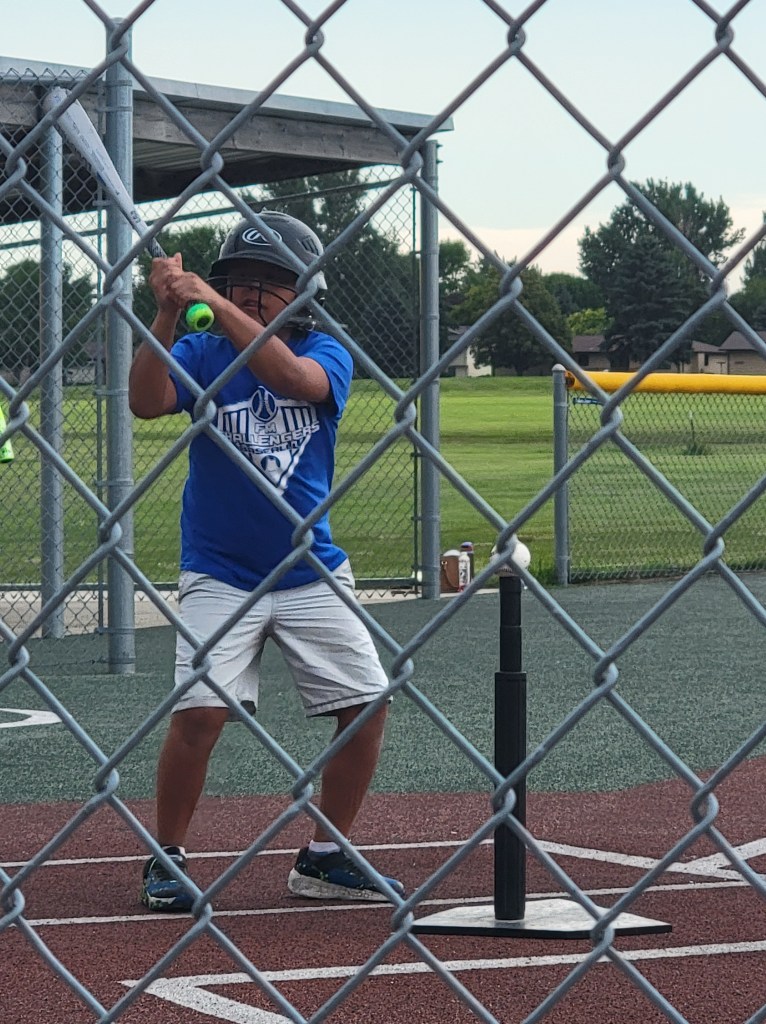

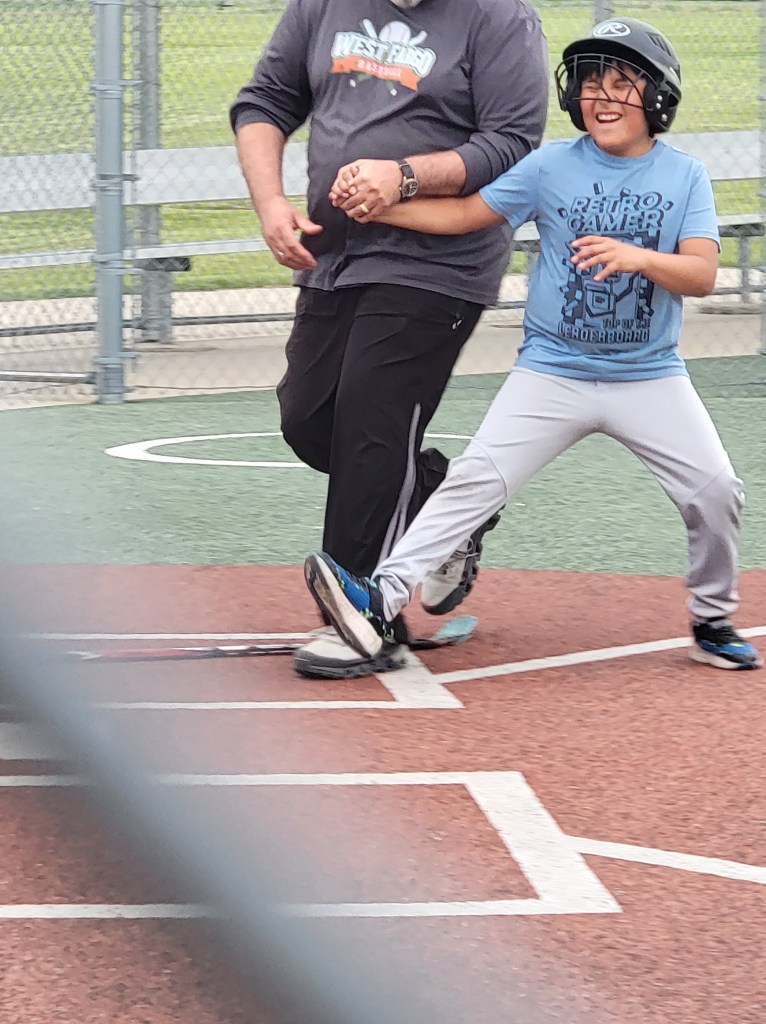
For those paying attention, you will probably notice that teaching a kid with no vision is not that much different than teaching sighted athletes to play baseball. The biggest hurdle is understanding that they are capable of doing it and then having that little extra patience to help them and encourage them to keep playing even when they get frustrated.
Organized ball may not be in the future, but we are lucky to have an adapted baseball organization in the area, HOPE, Inc who have invited visually impaired and blind athletes to play alongside wheelchair athletes. In the field, I am Titus’s eyes to help him get in front of ground balls and point him towards the correct base to throw to. When batting, he just needs me to guide him to Homeplate and clap as he’s running to first. We are also hoping to maybe organize a couple beep baseball games in the near future. If you don’t know what that is, please check out some of the links to follow. In a brief description, there is an audio baseball that batters hit and needs to reach an audible base before the fielding team finds the hit softball. At its highest level, they are ultra-competitive and hold the Beep Baseball World Series in St. Louis every summer, Go Minnesota Millers!



 Amazingly Blind