
Ryan and I have always enjoyed going to the theater, especially during the holidays. It’s a wonderful way to spend time together and get into the festive spirit. Now that the boys are old enough, we try to attend a couple of plays or musicals each year at our local community theater.
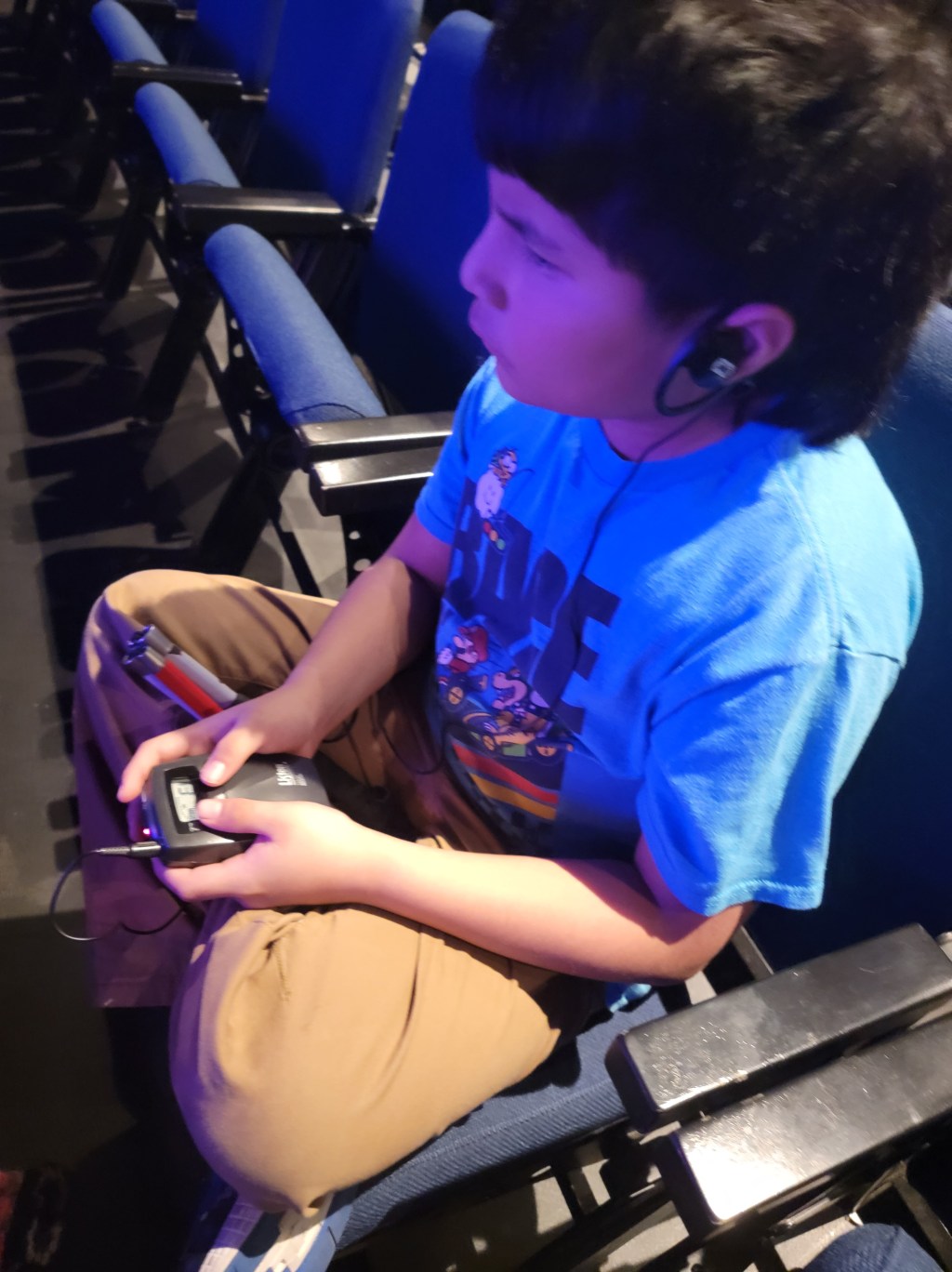
Much like going to the movies, some adaptations are needed for Titus to fully enjoy the experience of watching a play. In both settings, the story is told visually as well as verbally, which means without audio description, he would miss out on much of what’s happening. Thankfully, many newer movies include audio description, and at the theater, Titus wears a special headset that narrates the visual and quieter moments so he can follow along with what’s on screen. Plays with audio description work similarly—except the description is done live by a person.
For those unfamiliar with it, audio description is a form of narration that fills in the visual details—like actions, facial expressions, costumes, and scene changes—that aren’t spoken aloud. In live theater, a trained audio describer watches the play from the sidelines and carefully describes these visual moments during pauses in dialogue. It allows blind or visually impaired audience members to fully experience what’s happening on stage in real time, right alongside everyone else.
A few years ago, we attended a children’s play and had the pleasure of meeting a wonderful woman who volunteers as an audio describer for the blind and visually impaired. Her passion for theater and her commitment to making it accessible is nothing short of inspiring. She spends countless hours watching rehearsals and learning the storyline so she can provide accurate and vivid descriptions for audience members like Titus.
During the performance, Titus wears an earpiece in one ear so he can hear both the live dialogue and the descriptions of the silent or visual moments. The audio describer stands off to the side—close enough to see the action, but out of the way of the audience. She speaks into a small transmitter with a microphone that wraps around her mouth to muffle the sound, and the description is sent via radio waves to Titus’s receiver.

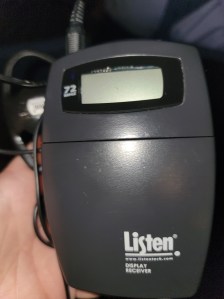
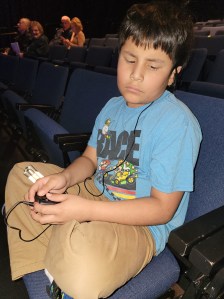
We usually meet the audio describer about 20 minutes before the show begins to make sure the equipment works and to go over any important details. At a few performances, we’ve even had the special opportunity to go up on stage beforehand, where Titus could explore the set, touch different props, and feel some of the costumes. We jump at these chances—they help him connect more deeply with the story and enjoy the show even more.

We live in an incredibly visual world, but with a few thoughtful adaptations and the help of kind, dedicated people, Titus can experience and enjoy it all right alongside the rest of us.
If you’ve never experienced a play with audio description—or if you know someone who could benefit from it—I highly recommend giving it a try. It’s not just about watching a play; it’s about being fully part of the story. Theater is meant to be shared, and it’s heartwarming to see more and more communities embracing accessibility so everyone can enjoy the magic of the stage.




 Amazingly Blind